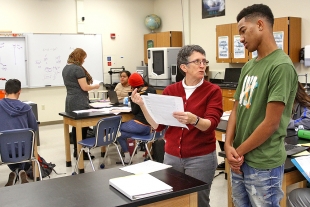
I will interact with youth in the future by teaching. I will be a Special Ed high school teacher one day. In addition, I would like to coach high school baseball too. I have already started to interact with some students during my fieldwork hours that I need to fulfill for my Child Development degree. I am enjoying it; the kids are fun to work with. They’re also teaching me a lot, as far as knowing how to effectively interact with them.
In addressing the second question, the nature of the child will be utilized by myself. Damon describes this as, “The positive youth development perspective emphasizes the manifest potentialities rather than the supposed incapacities of young people.” (Damon, W., 2004, p.15) It is important for a child to know what their strengths are, if they aren’t sure then I’ll help them figure it out. These will be some of the Positive Youth Development traits I will use with my students and baseball players. I will use these because I find them to be essential in enabling a student/athlete to help them thrive. Competence, confidence, and character are important elements to utilize.
My plan for using these specific elements are as follows: I know that once I’m in the classroom and around my students enough I will learn a lot about who they are. I believe as teachers it is necessary to be aware of the kind of students that they’re working with to know how to adequately support them. Once I know, I can help them to understand and learn concepts/lessons. “Competence,” is the result of achievement/success which they will gain and receive a score or grade letting them know that they are capable. This leads me to the next word, “Confidence,” the positive emotion that a person feels when they’ve had success or know something. My students will gain self-assurance through their learning. In addition, “Character,” is what is gained through the journey of failure, success. I personally find character an important element because it’s a result of who a person is and what they have endured. I believe I can’t teach this to a student, but I will sure be able to see the results and what a student is made of.
I don’t find any of these actions to be different from what I envisioned. I feel this way because it seems the most appropriate way to work with youth. It wouldn’t be productive to not look at the positive elements of them. As Damon stated, “Every child has talents, strengths, and interests that offer the child potential for a bright future.” (Damon, W., 2004, p.13) If you choose to just look at what they can’t do then how can you expect them to believe that they’re capable or worthy of contributing to society?
Citation
Damon, W. (2004). What is Positive Youth Development? The ANNALS of the American Academy of Political and Social Science, 591(1), 13-24. doi: 10.1177/0002716203260092
 Ian's Blog
my major is SOWK and I find it cool that we both want to work with the youth. I want to be a Coach just as you do but the only difference is that I will be a coach but at the same time I would want to work with juvenile delinquents as they are my main focus to help get kids back on track to be a greater and better person. What are your next steps in working with youth and how do you see yourself working with youth n the next few years of your life.
LikeLike
My next step will be to work inside a classroom for my fieldwork hours where I will gain the experience and knowledge necessary in order to become a teacher.
LikeLike
Ian you have clearly thought about this for a while now. It is clear to me that you have a plan of helping others not only in the classroom, but also on the field. I really like the quote you chose where Damon said one should “manifest potentialities rather than the supposed incapacities of young people.” I think with this in mind you will help and support many children. I am just curious what age level were you hoping to work with?
LikeLike
The age level I plan to work with are special ed high school students, in addition to being a high school baseball coach.
LikeLike